
When Donald J. Trump returned to the White House in January 2025, he didn’t waste time. Within nine months, his administration issued 217 executive orders — more than one every 1.5 days — and nearly half of them targeted immigration. The result? A legal earthquake rippling from border towns to federal courthouses, with New York City Bar Association sounding the alarm in a sweeping, 120-page report released October 10, 2025. This isn’t just policy shift. It’s a redefinition of how power works in Washington — and who gets to decide who stays and who gets sent away.
What Exactly Did Trump Do?
The report, formally titled REPORT ON THE TRUMP ADMINISTRATION'S 2025 CHANGES TO IMMIGRATION LAW, details a cascade of directives that collectively shut down pathways once considered routine: asylum claims now require near-impossible documentation before arrival; local police departments are being pressured — through funding threats and federal grants — to act as immigration enforcers; and the southern border, long a flashpoint, has been effectively closed to new entries under a sweeping reinterpretation of Title 8 authority. Even humanitarian relief programs like Temporary Protected Status (TPS) and Deferred Action for Childhood Arrivals (DACA) have been narrowed or suspended without congressional input. Maria Rodriguez, chair of the New York City Bar Association’s Immigration and Nationality Law Committee, called it "a legislative bypass on steroids." She pointed to Executive Order 14289, which allows the Department of Homeland Security to classify entire categories of noncitizens as "removal priorities" without individual hearings. "This isn’t enforcement," Rodriguez told reporters. "It’s pre-judgment. And it’s happening faster than courts can keep up."The Legal Backlash Has Already Begun
Courts are scrambling. As of October 10, federal district courts in California, Texas, Illinois, and New York had issued conflicting rulings — some blocking key orders, others allowing them to proceed. The New York City Bar Association’s report lists 47 active lawsuits, including one from the ACLU challenging EO 14312, which mandates state and local law enforcement to hold individuals for ICE beyond their release dates — a clear violation of the Fourth Amendment, according to legal scholars. William H. Pauley III, former federal judge and chair of the Bar Association’s Rule of Law Task Force, noted a troubling pattern: "The administration is treating the Constitution like a menu — pick and choose what to follow. They’re not just pushing boundaries. They’re erasing them." The Federal Register confirms the sheer volume: between January 20 and October 10, 2025, Donald J. Trump signed 217 executive orders — the highest number for any president in the first nine months of a term since Lyndon B. Johnson. Of those, 98 directly altered immigration procedures. Some, like EO 14198, revoked longstanding DHS guidance on prosecutorial discretion. Others, like EO 14305, redirected $1.2 billion in federal grants to jurisdictions that increased cooperation with ICE — though exact compliance metrics remain undisclosed.Why This Matters Beyond the Border
This isn’t just about immigrants. It’s about the balance of power. When the president unilaterally rewrites laws Congress wrote — like the Immigration and Nationality Act — he’s not just acting aggressively. He’s destabilizing the entire system. The New York City Bar Association warns that if unchecked, these actions could set a precedent for future presidents to bypass Congress on healthcare, education, or environmental rules. "If you can redefine who gets to stay in America without a vote," said Rodriguez, "what’s next?" The administration argues it’s merely "restoring order," citing campaign promises made during the 2024 election. But the report notes something more alarming: many of these orders contradict Supreme Court precedent, including Department of Homeland Security v. Regents of the University of California (2020), which ruled that DACA rescission was arbitrary and capricious. Now, DACA is being gutted — again — with no meaningful justification.What Comes Next?
The next major milestone is December 15, 2025, when the New York City Bar Association will release its next update. Legal teams are already preparing appeals to the Ninth and Second Circuits. Meanwhile, state attorneys general in New York, California, and Illinois have signaled they’ll join forces in a coordinated legal offensive. There’s also political pressure building. On October 18, 2025, Senator Elizabeth Warren introduced the Restoring Checks and Balances Act, which would require congressional approval for any executive order that alters immigration law. The bill has no chance in the current Senate — but it’s a signal. The resistance isn’t just legal. It’s becoming political.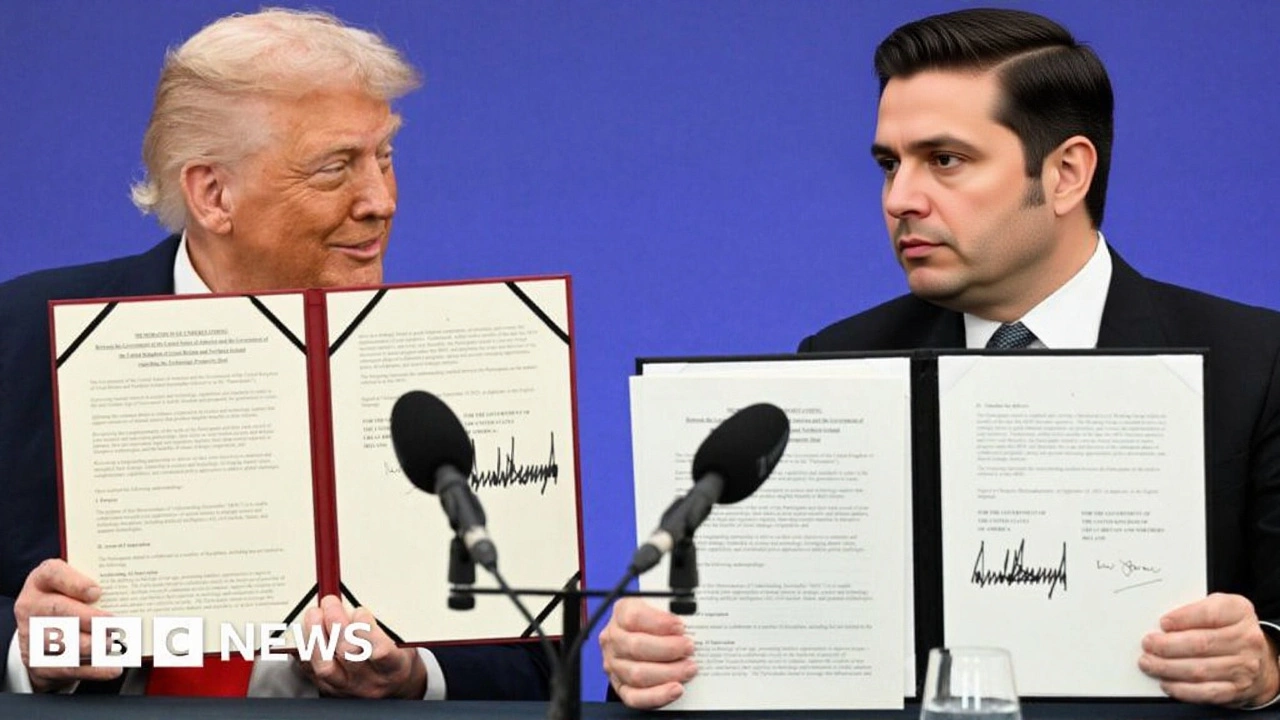
The Human Cost
Behind the numbers are real people. In El Paso, a mother from Honduras was detained under EO 14289 after her asylum claim was denied without a hearing. In Chicago, a college student with DACA status was told his work permit was revoked — retroactively — because of a policy memo buried in a DHS bulletin. These aren’t hypotheticals. They’re happening now. "We’re not just documenting changes," said Maria Rodriguez. "We’re documenting lives upended."Why the New York City Bar Association Matters
Founded in 1870 and headquartered at 42 West 44th Street in New York, the New York City Bar Association isn’t a political group. It’s a professional body with a mandate to uphold the rule of law. Its leadership — including President Susan J. Kohlmann, who took office in May 2025 — has no partisan agenda. Their report is dry, footnoted, and meticulously sourced. That’s what makes it so dangerous to the administration. It’s not opinion. It’s evidence.Frequently Asked Questions
How many of Trump’s 217 executive orders directly affect immigration?
According to the New York City Bar Association’s October 10, 2025 report, 98 of the 217 executive orders signed by President Donald J. Trump between January 20 and October 10, 2025, directly altered immigration procedures. These include changes to asylum rules, enforcement priorities, and funding incentives for local law enforcement cooperation with ICE.
What legal challenges are currently underway?
As of October 2025, 47 federal lawsuits have been filed against Trump’s immigration orders, with active cases in California, Texas, Illinois, and New York. Key challenges include the revocation of DACA without proper notice and the forced detention of individuals beyond their release dates. Courts have issued conflicting preliminary rulings, creating a patchwork of enforcement across states.
Is the New York City Bar Association taking sides politically?
No. The New York City Bar Association, founded in 1870, is a nonpartisan professional organization dedicated to upholding the rule of law. Its report is based on legal analysis of official documents — executive orders, court rulings, and federal registers — not political opinion. Its leadership, including President Susan J. Kohlmann, emphasizes neutrality, even as the report criticizes potential constitutional overreach.
What’s the significance of the December 15, 2025 update?
The December 15, 2025 update will reflect new court decisions, additional executive actions, and the impact of any congressional responses. Given the pace of litigation, this update could reveal whether federal appeals courts begin to rein in the administration’s authority — or if the legal chaos continues to deepen. It’s a critical checkpoint for legal practitioners and affected communities.
Can states refuse to cooperate with ICE under these orders?
Yes — but it’s risky. While the Supreme Court has previously ruled that the federal government can’t compel state officials to enforce federal law (per Printz v. United States), the Trump administration is now using financial leverage: threatening to withhold federal grants from jurisdictions that don’t comply. The exact dollar amounts aren’t public, but the pressure is real — and legally ambiguous.
How does this compare to past presidential actions on immigration?
No president in modern history has issued this many immigration-related executive orders in the first nine months. Obama issued 23 immigration orders over eight years; Trump issued 98 in under nine months. The scale, speed, and scope — particularly the targeting of humanitarian protections without legislative action — make this unprecedented. Legal experts say it’s less policy change and more structural overhaul.